

Let’s be honest for a moment.
We’ve all had those days when we’re sick, exhausted, in pain, or just mentally drained, and everything feels heavier than usual. Patience runs low. Emotions run high. And sometimes, without even realizing it, the way we speak to others changes.
But here’s the real question we explored in our latest episode of Behind the Mic:
Does being sick or unwell explain difficult behavior, or does it excuse it?
It’s not an easy question, and it’s definitely not a comfortable one.
Because on one hand, we all understand what it feels like to struggle. Pain is real. Stress is real. Fear is real. And when people are pushed to their limits, it shows.
But on the other hand, there’s a line. And sometimes, that line gets blurred.
Working as interpreters, we find ourselves right in the middle of this every single day.
We hear conversations that most people never hear. We step into moments where emotions are already high before we even say a word. Anxious patients, providers who are under pressure, families who are trying to understand what’s happening, all of it happening at once.
And somewhere in that space, tone shifts.
Frustration turns sharp.
Patience disappears.
Respect becomes optional.
Sometimes it’s subtle. A change in tone. A dismissive response.
Sometimes it’s direct. Raised voices. Blame. Harsh words.
And sometimes, it lands on us.
Not because we’ve done anything wrong, but because we’re there.
That’s the reality behind the mic.
In the episode of Behind the Mic, we talked about the difference between a reason and an excuse.
A reason helps us understand why someone is acting a certain way. It gives context. It allows for empathy.
An excuse, on the other hand, tries to justify everything, even when behavior becomes harmful or disrespectful.
Being sick is a reason. Being in pain is a reason. Being overwhelmed is a reason.
But does that mean anything goes?
That’s where things get complicated.
Because understanding someone’s situation doesn’t mean we have to accept everything that comes with it.
As interpreters, we’re trained to remain neutral. To stay calm. To deliver messages accurately, regardless of tone, emotion, or tension in the room.
But neutrality doesn’t mean we stop being human.
We still feel the weight of conversations.
We still hear the tone behind the words.
We still carry moments with us, even after the call ends.
And that’s why boundaries matter.
You can recognize that someone is struggling without accepting being treated poorly.
You can stay professional without absorbing everything that comes your way.
You can do your job well, clearly, accurately, and still protect your own mental space.
One of the most powerful shifts is this simple thought:
They’re having a hard time.
Not
I deserve to be treated this way.
That distinction changes everything.
We also turned the lens inward during this episode, because this conversation isn’t just about patients or providers.
It’s about us, too.
Interpreters get sick. We get tired. We burn out. We have off days, just like everyone else.
So what happens then?
Do we become less patient? Less focused? Less present?
And if we do, is that a reason, or an excuse?
The truth is, this job carries responsibility.
Accuracy matters. Tone matters. Clarity matters. People rely on us in moments that can be life-changing.
So while we are human, and we should give ourselves grace, we also need to hold ourselves accountable.
Taking breaks when needed. Asking for support. Recognizing when we’re not at our best.
That’s not a weakness. That’s professionalism.
This episode isn’t about judging people.
It’s about understanding the space we all operate in, especially in high-stress environments where emotions run high, and patience runs low.
It’s about finding that balance between empathy and accountability.
Because both can exist at the same time.
You can care, and still have boundaries.
You can understand, and still expect respect.
You can be human and still be professional.
If you’ve ever finished a call and just sat there for a moment, taking a breath before moving on to the next one, this conversation will feel familiar.
And if you’re new to interpreting, this is one of those realities no training can fully prepare you for, but one that you’ll learn to navigate over time.
We go deeper into this topic in the full episode, sharing real scenarios, honest reflections, and the kind of conversations that usually happen off the mic.
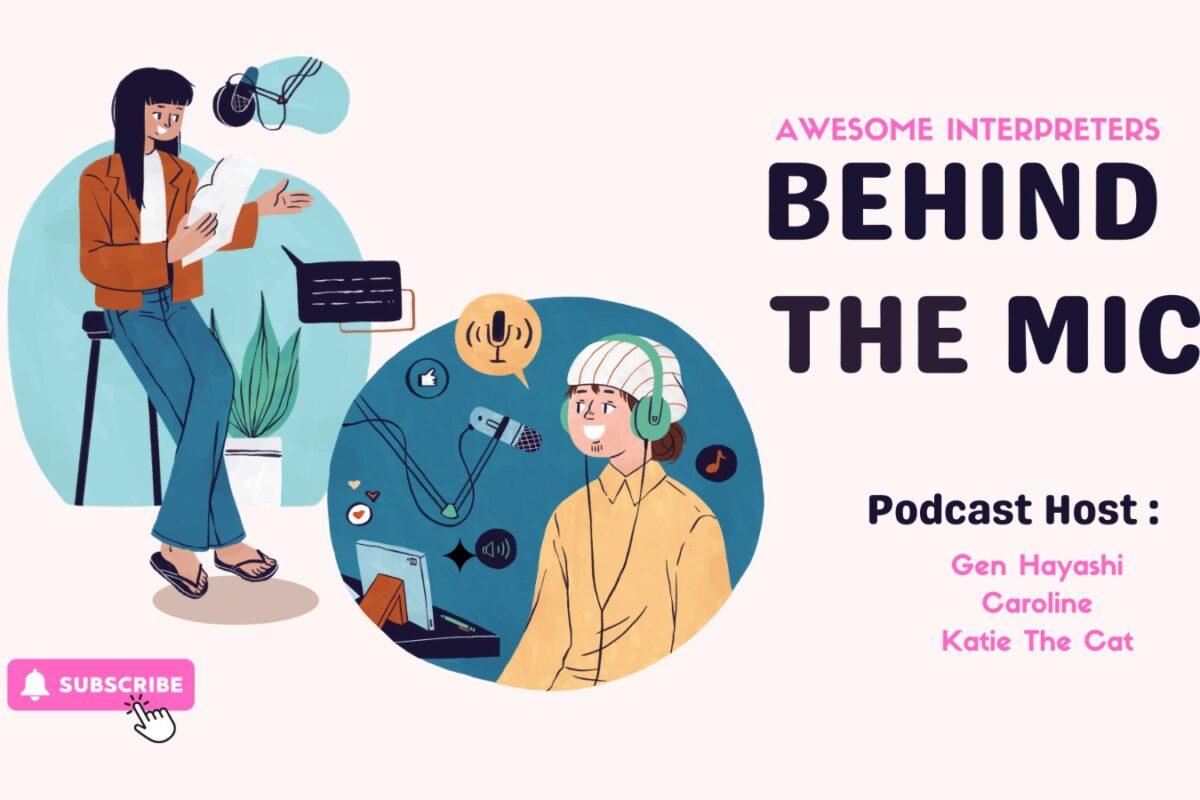
You can listen to the episode through the link below, or follow our podcast on Spotify, just search for Behind the Mic and join us there.
Because at the end of the day, being sick or struggling may explain how we feel.
But how we treat others still matters.