Welcome to the Behind The Mic Forum! A space for open conversations, shared experiences, and meaningful discussions. Whether it’s language, culture, daily life, or anything on your mind, feel free to create and share topics you’d like to talk about.
Sign up and jump into the conversation. Just keep our Community Guidelines in mind.
I interpreted a call involving a young girl diagnosed with Stickler Syndrome and severe hearing loss. Listening to the challenges faced by her family was heartbreaking. As someone whose profession revolves around communication, hearing about a child gradually losing access to sound struck a particularly emotional chord.
After the call ended, I felt compelled to learn more about this rare condition and share what I discovered. My hope is that this article can help raise awareness and perhaps encourage families to seek medical attention sooner if they recognize similar signs in their own children.
What Is Stickler Syndrome?
Stickler Syndrome is a rare inherited genetic disorder that affects connective tissue throughout the body. Connective tissue provides structure and support to many organs, including the eyes, ears, joints, bones, and facial structures.
The condition is caused by mutations in genes responsible for producing collagen, one of the body's most important structural proteins. Because collagen is found throughout the body, Stickler Syndrome can affect multiple systems simultaneously.
The severity varies greatly. Some individuals experience relatively mild symptoms, while others may face significant hearing, vision, skeletal, and developmental challenges throughout their lives.
Commonly affected areas include:
• Hearing • Vision • Facial development • Joints and bones • Speech and communication
What Causes Stickler Syndrome?
Stickler Syndrome is usually inherited from a parent carrying the genetic mutation, although some cases occur spontaneously without a family history.
The genes most commonly involved include:
• COL2A1 • COL11A1 • COL11A2 • COL9A1 • COL9A2
These genes provide instructions for producing collagen. When mutations occur, collagen develops abnormally, affecting multiple body systems.
Common Signs and Symptoms
Hearing Loss
One of the most significant complications of Stickler Syndrome is hearing loss.
Hearing loss may be:
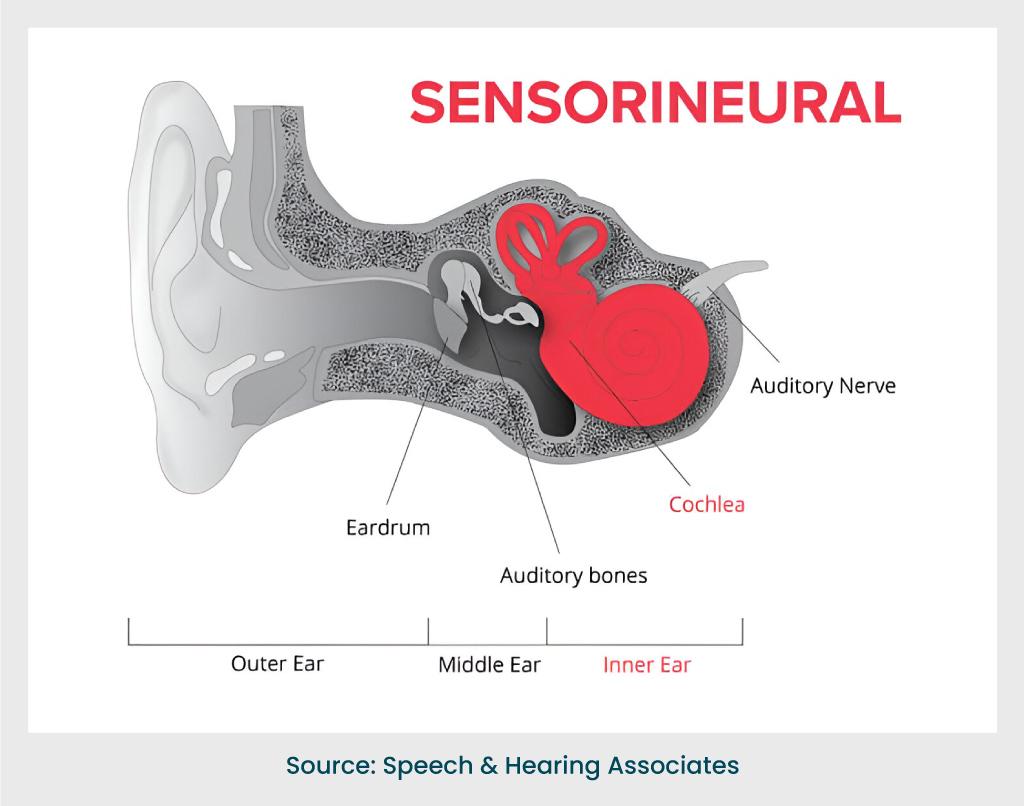
• Sensorineural hearing loss (inner ear damage) • Conductive hearing loss (middle ear problems) • Mixed hearing loss (combination of both)
Some children are born with hearing loss, while others experience gradual worsening over time.
Parents may notice:
• Delayed speech development • Difficulty responding to sounds • Frequently asking others to repeat themselves • Increasing television volume excessively • Struggles in noisy environments
For many children, hearing challenges become more apparent when they begin school.
Vision Problems
Vision complications are among the most serious features of Stickler Syndrome.
Joint symptoms often become more noticeable during adolescence and adulthood.
Why Does Stickler Syndrome Cause Hearing Loss?
The structures inside the ear rely heavily on healthy collagen to function correctly.
When collagen develops abnormally, it can affect:
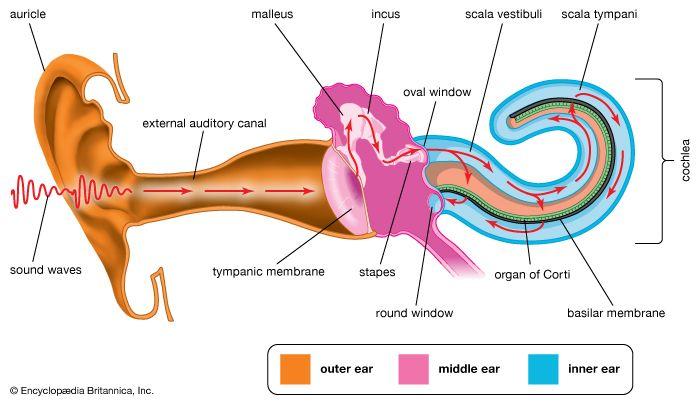
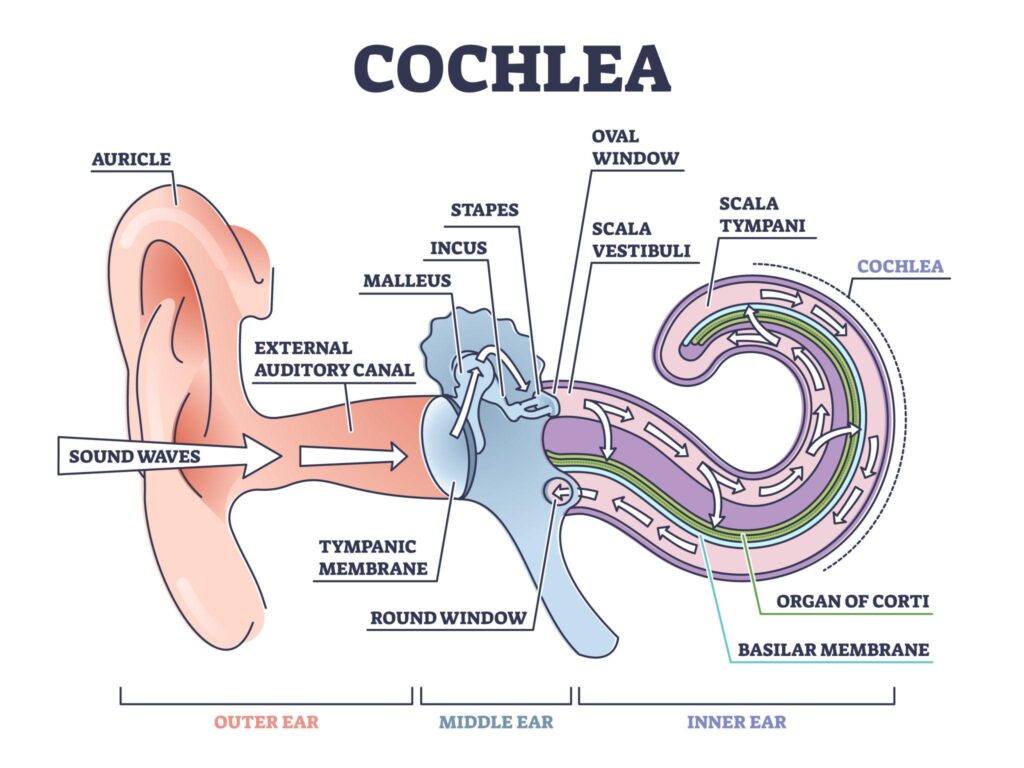
• The cochlea (hearing organ) • Hair cells responsible for sound detection • Middle ear structures • Sound transmission pathways
Unfortunately, modern medicine cannot currently prevent the genetic changes that cause hearing loss in Stickler Syndrome.
However, hearing specialists can often help patients hear significantly better through assistive technologies and rehabilitation.
Why Does Hearing Loss Occur?
Abnormal collagen can affect structures within the ear responsible for hearing and sound processing.
Understanding Hearing Loss
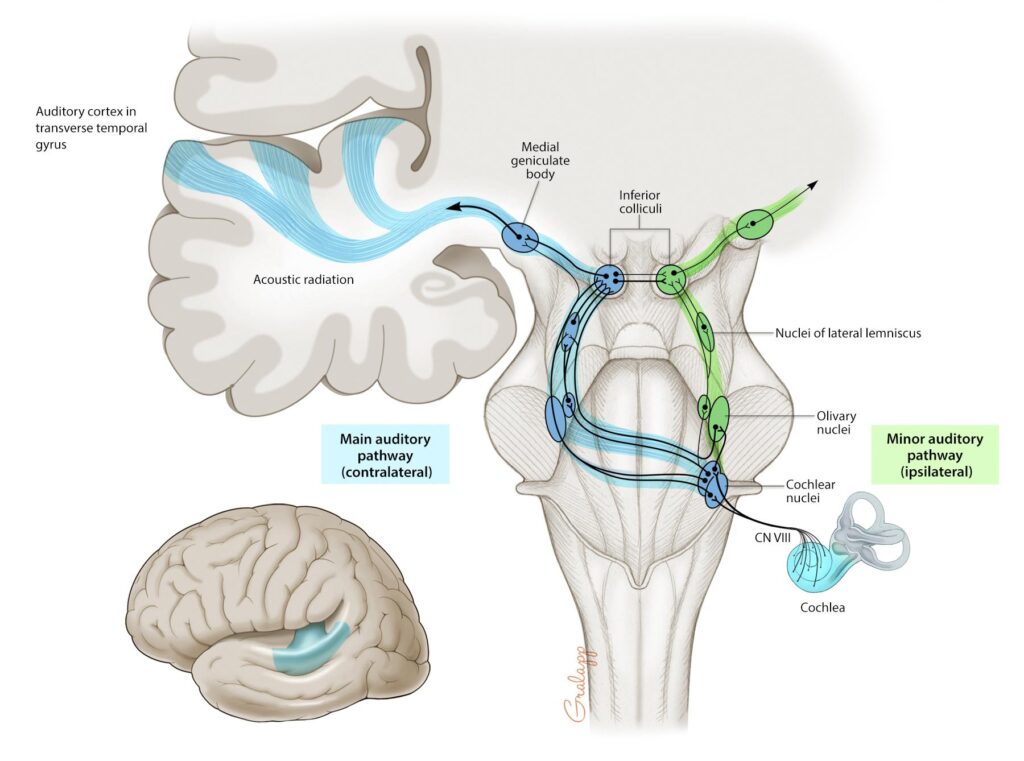
The inner ear contains delicate structures that convert sound waves into signals the brain can understand.
Can Hearing Loss Be Prevented?
This is one of the most difficult realities for families to hear.
At present, there is no cure for Stickler Syndrome, and there is no known treatment capable of stopping the underlying genetic process responsible for hearing loss.
However, there is tremendous hope.
While doctors may not be able to prevent hearing loss from occurring, they can often improve a person's ability to hear, communicate, learn, and interact with the world.
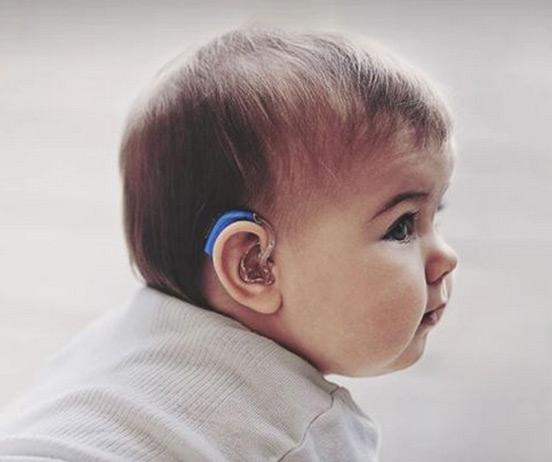
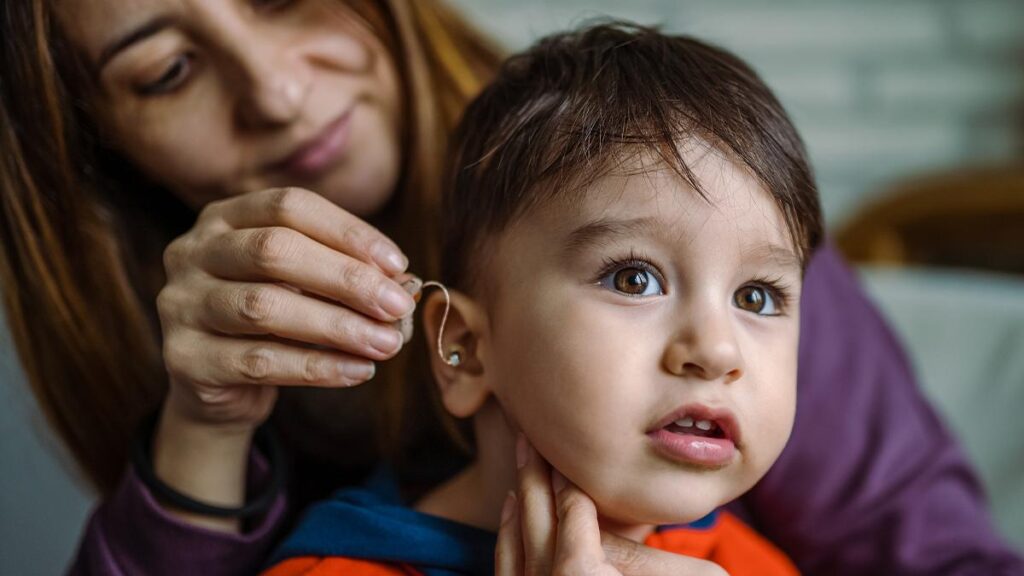
Hearing Aids
For mild to moderate hearing loss, hearing aids are frequently the first recommendation.
Modern hearing aids can:
• Amplify speech sounds • Improve classroom participation • Enhance social interactions • Support speech and language development
Many children with Stickler Syndrome benefit greatly from properly fitted hearing aids.
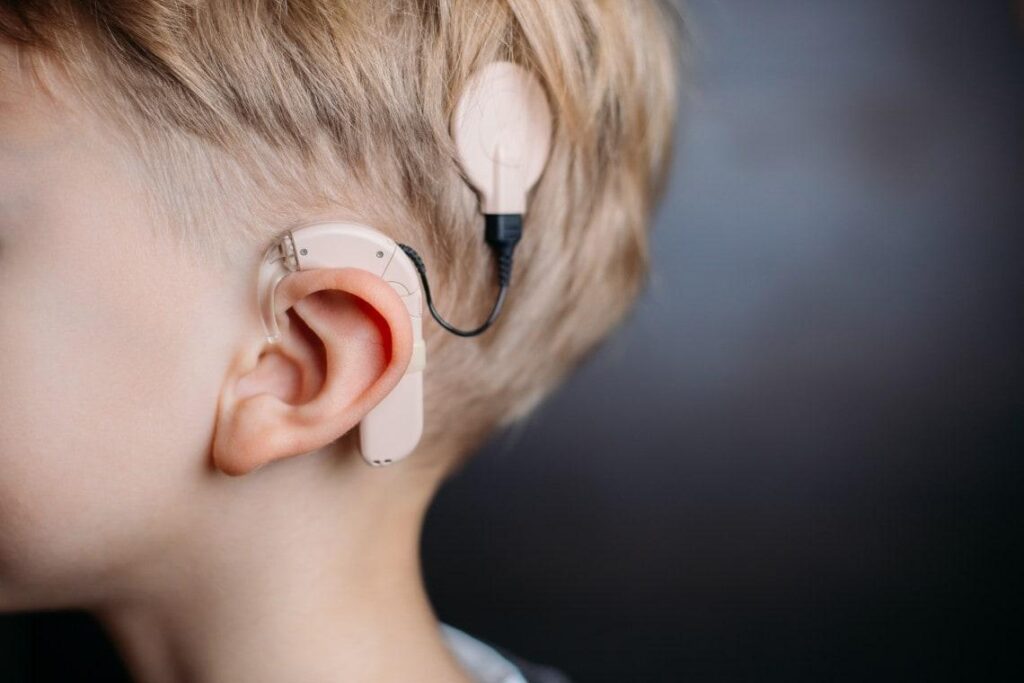
Cochlear Implants
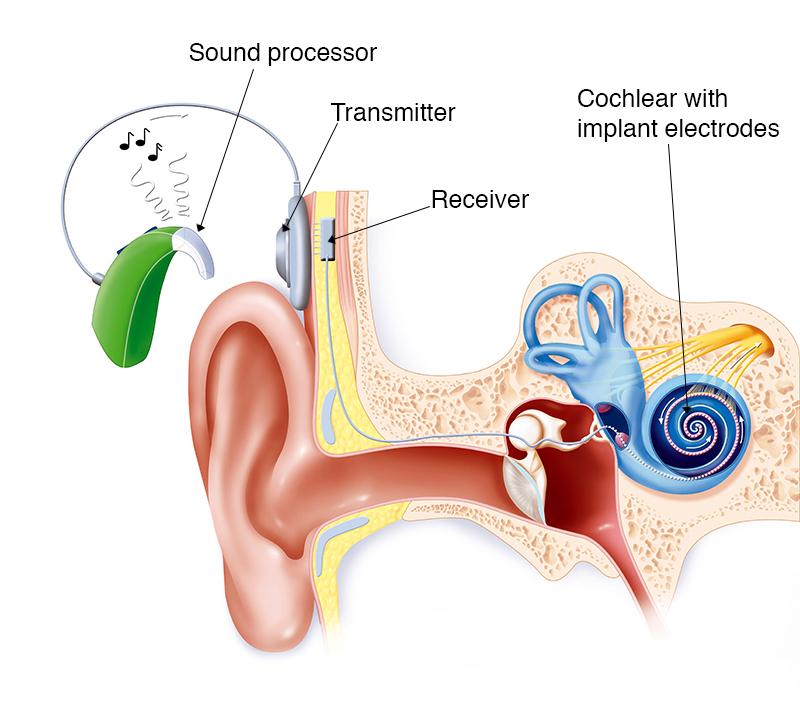
For severe to profound hearing loss, ENT specialists and audiologists may recommend cochlear implants.
Unlike hearing aids, which simply make sounds louder, cochlear implants bypass damaged portions of the inner ear and directly stimulate the auditory nerve.
This technology can provide access to sounds that would otherwise be impossible to hear.
For many children, cochlear implants have transformed communication, education, and independence.
Early intervention often leads to better outcomes because the developing brain is especially responsive to sound and language exposure during childhood.
Cochlear implants can help children with severe or profound hearing loss access sounds that hearing aids alone may not provide.
The Specialists Who Help
Because Stickler Syndrome affects multiple body systems, treatment often involves a team of specialists.
ENT Specialist (Ear, Nose and Throat Doctor)
Evaluates hearing loss and recommends treatment options.
Audiologist
Performs hearing tests and manages hearing aids or cochlear implant programming.
Ophthalmologist
Monitors vision and screens for retinal complications.
Geneticist
Confirms diagnosis through genetic testing and provides family counseling.
Speech-Language Pathologist
Supports speech, language, communication, and feeding development.
Orthopedic Specialist
Manages joint pain, skeletal abnormalities, and mobility concerns.
When Should Parents Seek Help?
Parents should speak with a healthcare professional if a child:
• Does not consistently respond to sounds • Shows delayed speech development • Frequently asks for repetition • Appears to hear some sounds but not others • Has severe nearsightedness at a young age • Experiences unusual joint pain • Has a cleft palate or facial differences
Early diagnosis allows doctors to monitor hearing and vision closely, potentially preventing complications that may otherwise go unnoticed.
What To Do If You Suspect Stickler Syndrome
If you are concerned about your child or someone you know:
Schedule a visit with a pediatrician.
Request a comprehensive hearing evaluation.
Arrange a full eye examination.
Ask about referral to a genetic specialist.
Follow through with specialist recommendations.
Continue regular monitoring, even if symptoms seem mild.
Early intervention cannot cure Stickler Syndrome, but it can dramatically improve quality of life and preserve important functions for as long as possible.
A Personal Reflection
As interpreters, we often witness moments that most people never see.
Today's call reminded me that hearing is something many of us take for granted until it begins to disappear.
The young girl I interpreted for may face challenges ahead, but she also has access to extraordinary medical professionals, hearing technology, educational support, and a family that clearly cares deeply for her future.
While Stickler Syndrome cannot currently be cured, children diagnosed with it can still thrive, communicate, learn, build relationships, and pursue their dreams.
Sometimes awareness is the first step toward helping someone hear the world a little more clearly.
Hearing Solutions That Can Help
Hearing aids and cochlear implants cannot cure Stickler Syndrome, but they can dramatically improve access to sound, communication, and learning.
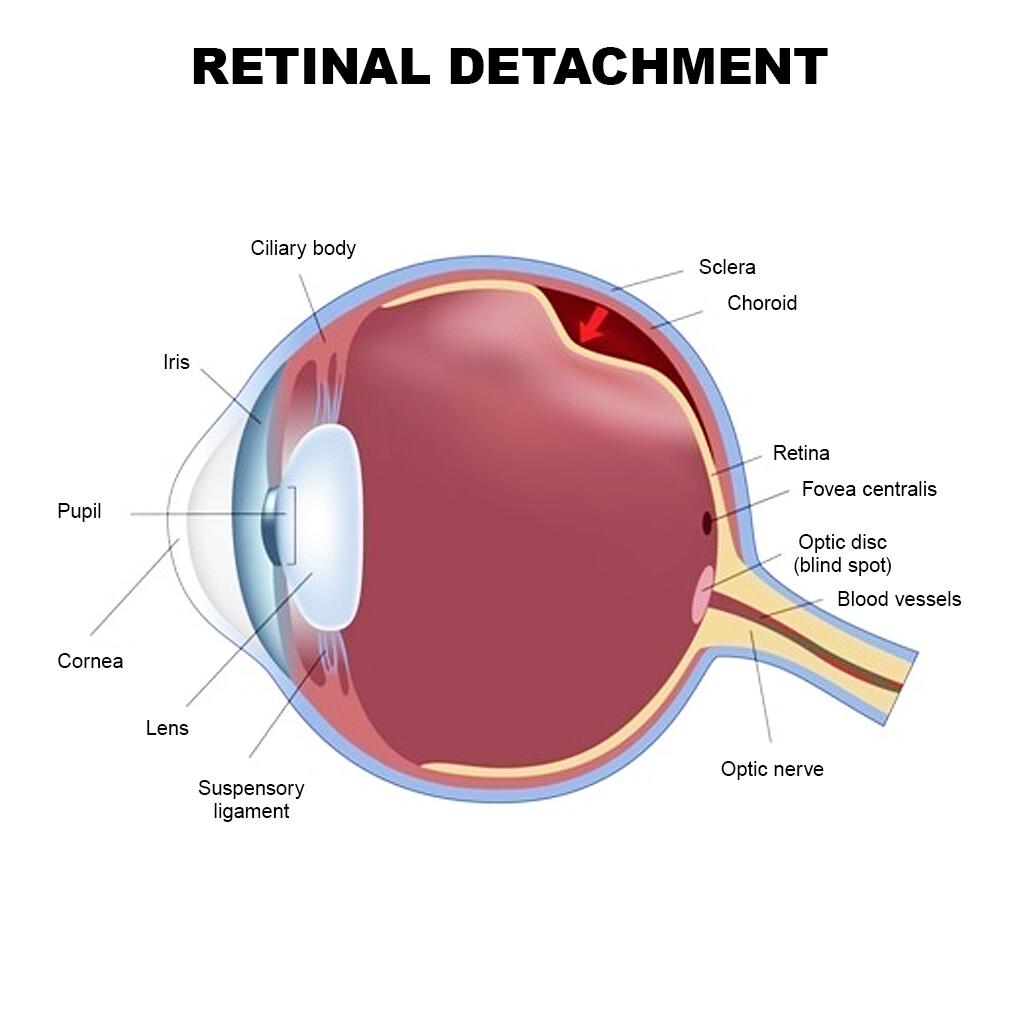
Vision Complications Are Equally Important
Regular eye examinations are essential because retinal complications can occur in individuals with Stickler Syndrome.
Disclaimer: This article is for educational purposes only and should not replace professional medical advice, diagnosis, or treatment. If you have concerns about hearing loss, vision changes, or developmental delays, consult a qualified healthcare professional.
I interpreted a call involving a young girl diagnosed with Stickler Syndrome and severe hearing loss. Listening to the challenges faced by her family was heartbreaking. As someone whose profession revolves around communication, hearing about a child gradually losing access to sound struck a particularly emotional chord.
After the call ended, I felt compelled to learn more about this rare condition and share what I discovered. My hope is that this article can help raise awareness and perhaps encourage families to seek medical attention sooner if they recognize similar signs in their own children.
What Is Stickler Syndrome?
Stickler Syndrome is a rare inherited genetic disorder that affects connective tissue throughout the body. Connective tissue provides structure and support to many organs, including the eyes, ears, joints, bones, and facial structures.
The condition is caused by mutations in genes responsible for producing collagen, one of the body's most important structural proteins. Because collagen is found throughout the body, Stickler Syndrome can affect multiple systems simultaneously.
The severity varies greatly. Some individuals experience relatively mild symptoms, while others may face significant hearing, vision, skeletal, and developmental challenges throughout their lives.
Commonly affected areas include:
• Hearing • Vision • Facial development • Joints and bones • Speech and communication
What Causes Stickler Syndrome?
Stickler Syndrome is usually inherited from a parent carrying the genetic mutation, although some cases occur spontaneously without a family history.
The genes most commonly involved include:
• COL2A1 • COL11A1 • COL11A2 • COL9A1 • COL9A2
These genes provide instructions for producing collagen. When mutations occur, collagen develops abnormally, affecting multiple body systems.
Common Signs and Symptoms
Hearing Loss
One of the most significant complications of Stickler Syndrome is hearing loss.
Hearing loss may be:
• Sensorineural hearing loss (inner ear damage) • Conductive hearing loss (middle ear problems) • Mixed hearing loss (combination of both)
Some children are born with hearing loss, while others experience gradual worsening over time.
Parents may notice:
• Delayed speech development • Difficulty responding to sounds • Frequently asking others to repeat themselves • Increasing television volume excessively • Struggles in noisy environments
For many children, hearing challenges become more apparent when they begin school.
Vision Problems
Vision complications are among the most serious features of Stickler Syndrome.
Joint symptoms often become more noticeable during adolescence and adulthood.
Why Does Stickler Syndrome Cause Hearing Loss?
The structures inside the ear rely heavily on healthy collagen to function correctly.
When collagen develops abnormally, it can affect:
• The cochlea (hearing organ) • Hair cells responsible for sound detection • Middle ear structures • Sound transmission pathways
Unfortunately, modern medicine cannot currently prevent the genetic changes that cause hearing loss in Stickler Syndrome.
However, hearing specialists can often help patients hear significantly better through assistive technologies and rehabilitation.
Why Does Hearing Loss Occur?
Abnormal collagen can affect structures within the ear responsible for hearing and sound processing.
Understanding Hearing Loss
The inner ear contains delicate structures that convert sound waves into signals the brain can understand.
Can Hearing Loss Be Prevented?
This is one of the most difficult realities for families to hear.
At present, there is no cure for Stickler Syndrome, and there is no known treatment capable of stopping the underlying genetic process responsible for hearing loss.
However, there is tremendous hope.
While doctors may not be able to prevent hearing loss from occurring, they can often improve a person's ability to hear, communicate, learn, and interact with the world.
Hearing Aids
For mild to moderate hearing loss, hearing aids are frequently the first recommendation.
Modern hearing aids can:
• Amplify speech sounds • Improve classroom participation • Enhance social interactions • Support speech and language development
Many children with Stickler Syndrome benefit greatly from properly fitted hearing aids.
Cochlear Implants
For severe to profound hearing loss, ENT specialists and audiologists may recommend cochlear implants.
Unlike hearing aids, which simply make sounds louder, cochlear implants bypass damaged portions of the inner ear and directly stimulate the auditory nerve.
This technology can provide access to sounds that would otherwise be impossible to hear.
For many children, cochlear implants have transformed communication, education, and independence.
Early intervention often leads to better outcomes because the developing brain is especially responsive to sound and language exposure during childhood.
Cochlear implants can help children with severe or profound hearing loss access sounds that hearing aids alone may not provide.
The Specialists Who Help
Because Stickler Syndrome affects multiple body systems, treatment often involves a team of specialists.
ENT Specialist (Ear, Nose and Throat Doctor)
Evaluates hearing loss and recommends treatment options.
Audiologist
Performs hearing tests and manages hearing aids or cochlear implant programming.
Ophthalmologist
Monitors vision and screens for retinal complications.
Geneticist
Confirms diagnosis through genetic testing and provides family counseling.
Speech-Language Pathologist
Supports speech, language, communication, and feeding development.
Orthopedic Specialist
Manages joint pain, skeletal abnormalities, and mobility concerns.
When Should Parents Seek Help?
Parents should speak with a healthcare professional if a child:
• Does not consistently respond to sounds • Shows delayed speech development • Frequently asks for repetition • Appears to hear some sounds but not others • Has severe nearsightedness at a young age • Experiences unusual joint pain • Has a cleft palate or facial differences
Early diagnosis allows doctors to monitor hearing and vision closely, potentially preventing complications that may otherwise go unnoticed.
What To Do If You Suspect Stickler Syndrome
If you are concerned about your child or someone you know:
Schedule a visit with a pediatrician.
Request a comprehensive hearing evaluation.
Arrange a full eye examination.
Ask about referral to a genetic specialist.
Follow through with specialist recommendations.
Continue regular monitoring, even if symptoms seem mild.
Early intervention cannot cure Stickler Syndrome, but it can dramatically improve quality of life and preserve important functions for as long as possible.
A Personal Reflection
As interpreters, we often witness moments that most people never see.
Today's call reminded me that hearing is something many of us take for granted until it begins to disappear.
The young girl I interpreted for may face challenges ahead, but she also has access to extraordinary medical professionals, hearing technology, educational support, and a family that clearly cares deeply for her future.
While Stickler Syndrome cannot currently be cured, children diagnosed with it can still thrive, communicate, learn, build relationships, and pursue their dreams.
Sometimes awareness is the first step toward helping someone hear the world a little more clearly.
Hearing Solutions That Can Help
Hearing aids and cochlear implants cannot cure Stickler Syndrome, but they can dramatically improve access to sound, communication, and learning.
Vision Complications Are Equally Important
Regular eye examinations are essential because retinal complications can occur in individuals with Stickler Syndrome.
Disclaimer: This article is for educational purposes only and should not replace professional medical advice, diagnosis, or treatment. If you have concerns about hearing loss, vision changes, or developmental delays, consult a qualified healthcare professional.
We use cookies to ensure the proper functioning of Behind The Mic, enhance your browsing experience, analyze site traffic, and personalize content. By continuing to access or use this website, you consent to the use of cookies in accordance with our Privacy Policy and applicable international data protection laws.
Functional
Always active
The technical storage or access is strictly necessary for the legitimate purpose of enabling the use of a specific service explicitly requested by the subscriber or user, or for the sole purpose of carrying out the transmission of a communication over an electronic communications network.
Preferences
The technical storage or access is necessary for the legitimate purpose of storing preferences that are not requested by the subscriber or user.
Statistics
The technical storage or access that is used exclusively for statistical purposes.The technical storage or access that is used exclusively for anonymous statistical purposes. Without a subpoena, voluntary compliance on the part of your Internet Service Provider, or additional records from a third party, information stored or retrieved for this purpose alone cannot usually be used to identify you.
Marketing
The technical storage or access is required to create user profiles to send advertising, or to track the user on a website or across several websites for similar marketing purposes.