

Regardless of which side of the political aisle you stand on, the basic well-being of people should never become a bargaining chip.
There was a call I interpreted recently that stayed with me long after the conversation ended.
It was a medical call involving a young patient and their parents. Medically speaking, nothing particularly serious was happening. The child had a gastrointestinal infection and was also experiencing malnutrition. It was one of those calls that, from a medical interpretation standpoint, was relatively straightforward.
But then came the part that made me stop and think.
The parents were low-income earners, struggling to stay afloat financially. Between rent, utilities, insurance and the other necessities of everyday living, most of their income was already spoken for. There wasn’t much room left for anything else.
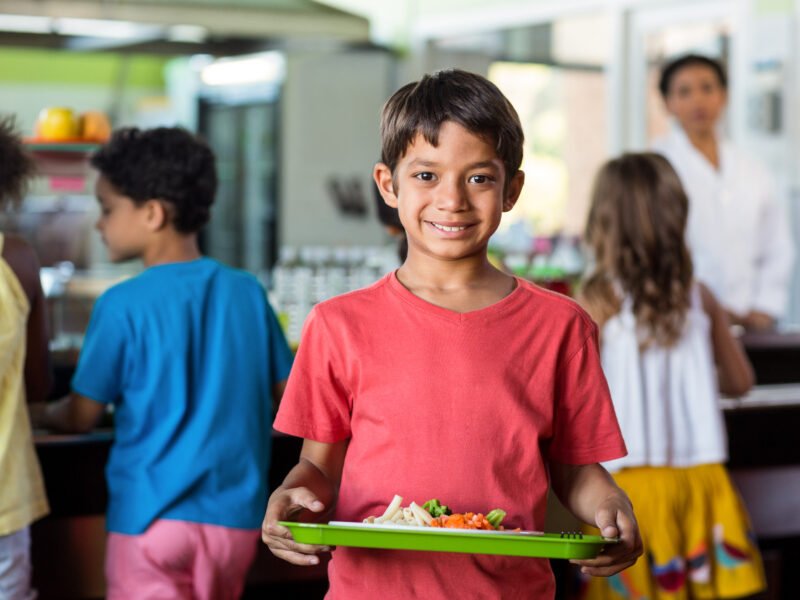
During the conversation, they expressed their hope that the doctor could help connect them with a social worker. They wanted assistance applying for SNAP, the Supplemental Nutrition Assistance Program, because they were hoping to secure free school meals for their children.
Think about that for a moment.
These parents weren’t asking for luxuries. They weren’t asking for someone to pay for a holiday or buy them something they couldn’t afford. They were simply hoping their children could have access to proper meals at school.
And somehow, even that had become another financial hurdle they needed help navigating.
When policy decisions reach the dinner table
This brings me to something that has been bothering me.
The One Big Beautiful Bill Act, signed into law in July 2025, introduced substantial changes to SNAP, including changes to eligibility, benefit funding and administrative responsibilities.
While the legislation did not directly eliminate the National School Lunch Program, its changes to SNAP and other safety-net programs can have consequences beyond the programs themselves.
Why?
Because participation in SNAP has traditionally helped children qualify automatically for free school meals through a process known as direct certification. It also helps schools determine whether they qualify for programs that provide free meals to all students.
When families lose access to SNAP, children may lose that automatic pathway to free meals. Schools may also face changes in their eligibility and funding calculations.
In other words, a decision made at the federal level can eventually find its way into a child’s lunch tray.
And that is what concerns me.
We can debate government spending, fiscal responsibility, economic priorities and political ideologies all day long. Those are legitimate discussions to have. Governments have budgets to manage, and policies will always involve difficult decisions.
But somewhere in all those discussions, I hope we don’t lose sight of the people who depend on these programs.
Behind every statistic is a family. Behind every policy change is someone who may have to make another difficult decision about how to get through the month.
A parent deciding whether to pay the electricity bill or buy groceries. A child going to school without knowing whether there will be enough food at home. A family working hard, doing everything they can, yet still finding themselves falling behind.
These aren’t abstract economic problems. They are people’s lives.
A child shouldn’t have to pay the price
Something about this particular call struck me.
The child was receiving medical attention for an infection and malnutrition. Meanwhile, the parents were trying to find a way to make sure their children had access to food at school.
Think about the bigger picture. We want children to grow, learn, concentrate and develop. We want them to attend school, perform well and have opportunities to build a better future.
But how can we expect children to do all of that when something as fundamental as access to food becomes uncertain?
Food is not a privilege. It is a basic human need.
School meals are not simply about providing lunch. For some children, they are an important and reliable source of nutrition. They can make a real difference to a child’s ability to concentrate, participate and learn.
And for struggling parents, knowing that their children will receive a meal at school can take away at least one worry from an already overwhelming list.
I am not suggesting that every government program is perfect, or that every policy should remain unchanged forever. Programs should be reviewed, improved and made sustainable.
But reform should not mean forgetting the people these programs were created to support.
Power comes with responsibility
I have always believed that having power comes with responsibility.
Whether you are a politician, a policymaker, a government official or someone sitting in a position where your decisions affect thousands or even millions of people, you should understand that your decisions have consequences beyond the numbers on a spreadsheet.
And this isn’t about Democrats versus Republicans, conservatives versus liberals, or which political party happens to be in power.
It is about basic human decency.
You can disagree with someone’s political beliefs and still recognise their right to food, healthcare, education and dignity.
You can have different opinions about how public money should be spent and still agree that children should not go hungry.
You can support one political party without having to defend every single decision it makes.
That distinction matters.
When people are struggling, their basic needs should not become political bargaining chips. Access to food, healthcare and the opportunity to live with dignity should never be treated as something people must earn through political loyalty or ideological agreement.
If you have the power to make a change, at the very least, make sure the people are taken care of.
A reminder from behind the microphone
As an interpreter, I often find myself in conversations that go beyond the words being spoken.
I interpret what people say, but I also get to witness small pieces of their lives. Sometimes those conversations involve medical emergencies, financial difficulties, family struggles or decisions that no one should have to make.
I cannot change their circumstances. I cannot promise them that everything will work out. My responsibility is to facilitate communication accurately, professionally and impartially.
But being an interpreter doesn’t mean I stop being human when a call ends.
Sometimes, a seemingly ordinary call stays with you because it reminds you how different people’s circumstances can be, and how much some families are struggling just to get through an ordinary day.
This was one of those calls.
I don’t know what happened after the conversation. I hope the parents managed to connect with a social worker. I hope they received the assistance they were looking for. Most importantly, I hope their children are doing better.
But I keep coming back to one thought.
We often measure a country’s success by its economy, its infrastructure, its military strength, its technological advancements and its position on the global stage.
Those things matter, of course.
But perhaps we should also measure success by how we treat the people who are struggling the most.
Can a working parent afford to feed their children? Can a family access healthcare without being financially devastated? Can a child go to school without worrying about their next meal?
Because at the end of the day, what is the point of having all the power in the world if we cannot make life a little better for the people we are supposed to serve?
Regardless of your political affiliation, take care of the people. That should never be too much to ask.